

I once locked myself out of an old RAR file that had some project notes and screenshots inside. The file was still there, but WinRAR kept asking for a password, and none of my usual guesses worked.
After trying birthdays, simple numbers, and a few old passwords, I stopped guessing manually and used Dr.Archive instead. It supports RAR/RAR5 files and gives you different recovery modes, such as Dictionary, Mask, and Brute-force. For my case, Mask Attack was the most useful because I still remembered part of the password.
Why I Chose Dr.Archive
I did not want to upload my archive to an online service, especially because it contained personal files. I wanted a desktop tool that could run on my own computer.
Dr.Archive looked simple enough for me. I only needed to add the locked RAR file, choose a recovery mode, enter the password hints I remembered, and start the search.
It also offers different recovery methods, so I did not have to depend on random guessing.
Step 1: Add the Locked RAR File
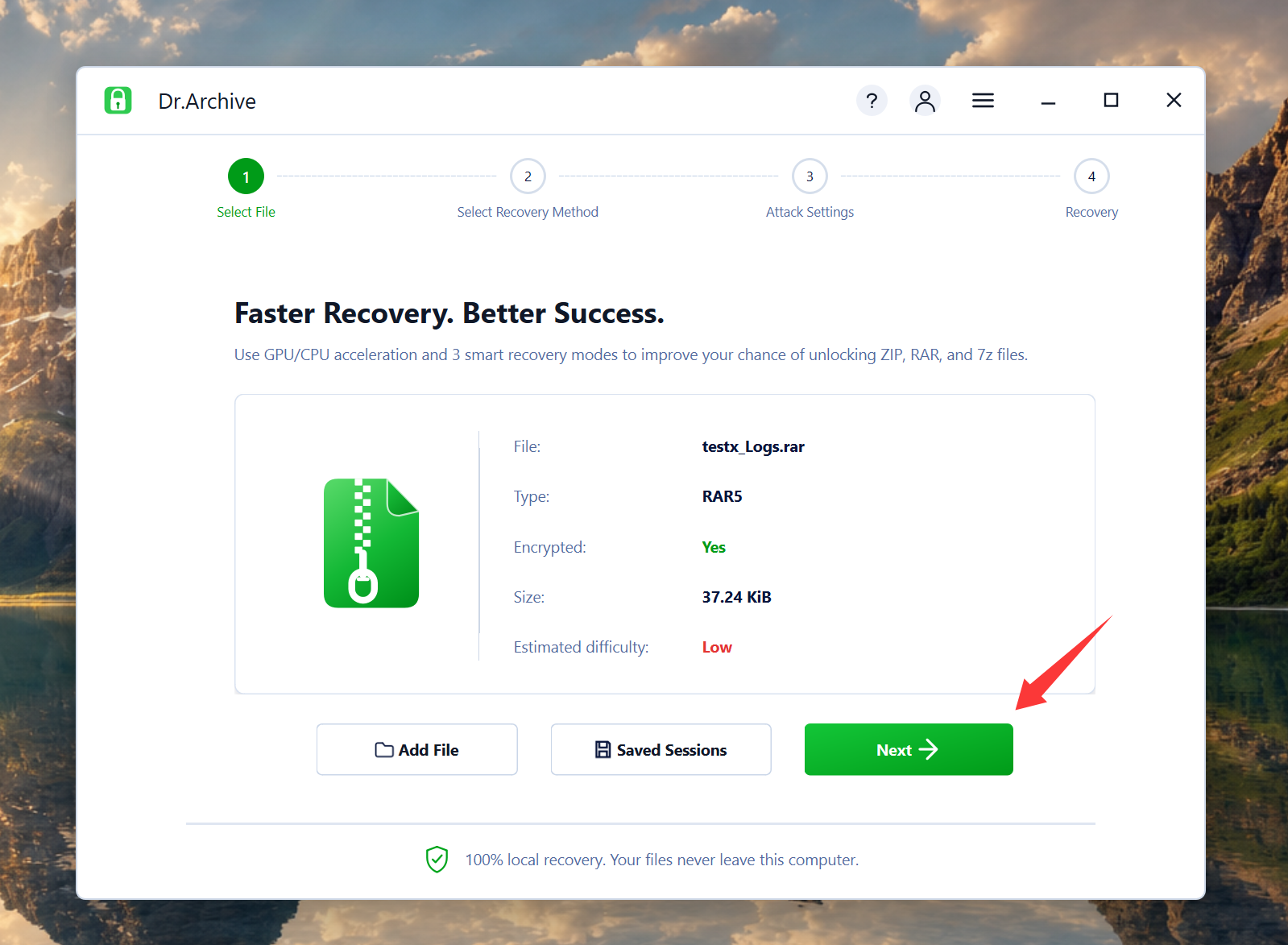
First, I opened Dr.Archive and clicked Add File.
After selecting the RAR file, the program showed basic information, such as the file name, archive type, encryption status, size, and difficulty level. This helped me confirm that I had selected the correct file before moving on.
Step 2: Choose a Recovery Mode
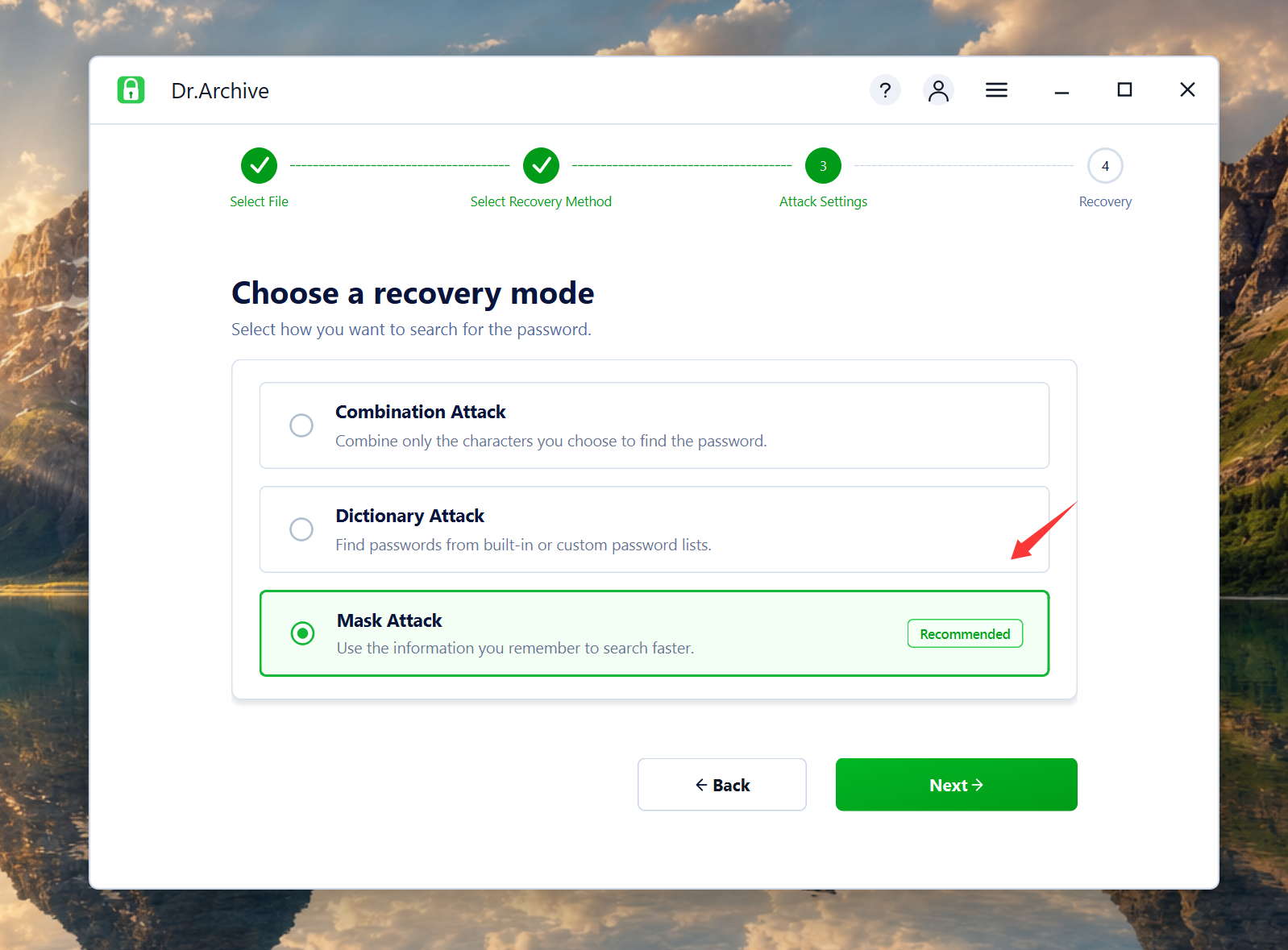
Next, I chose how Dr.Archive should search for the password.
Dictionary Attack is useful when the password may be based on common words, names, dates, or old passwords.
Mask Attack is useful when you remember part of the password, such as the beginning, ending, length, or character type.
Brute-force Attack tries many possible combinations. It can be helpful, but it usually takes more time.
Since I remembered a small part of the password, I chose Mask Attack.
Step 3: Enter the Password Hints
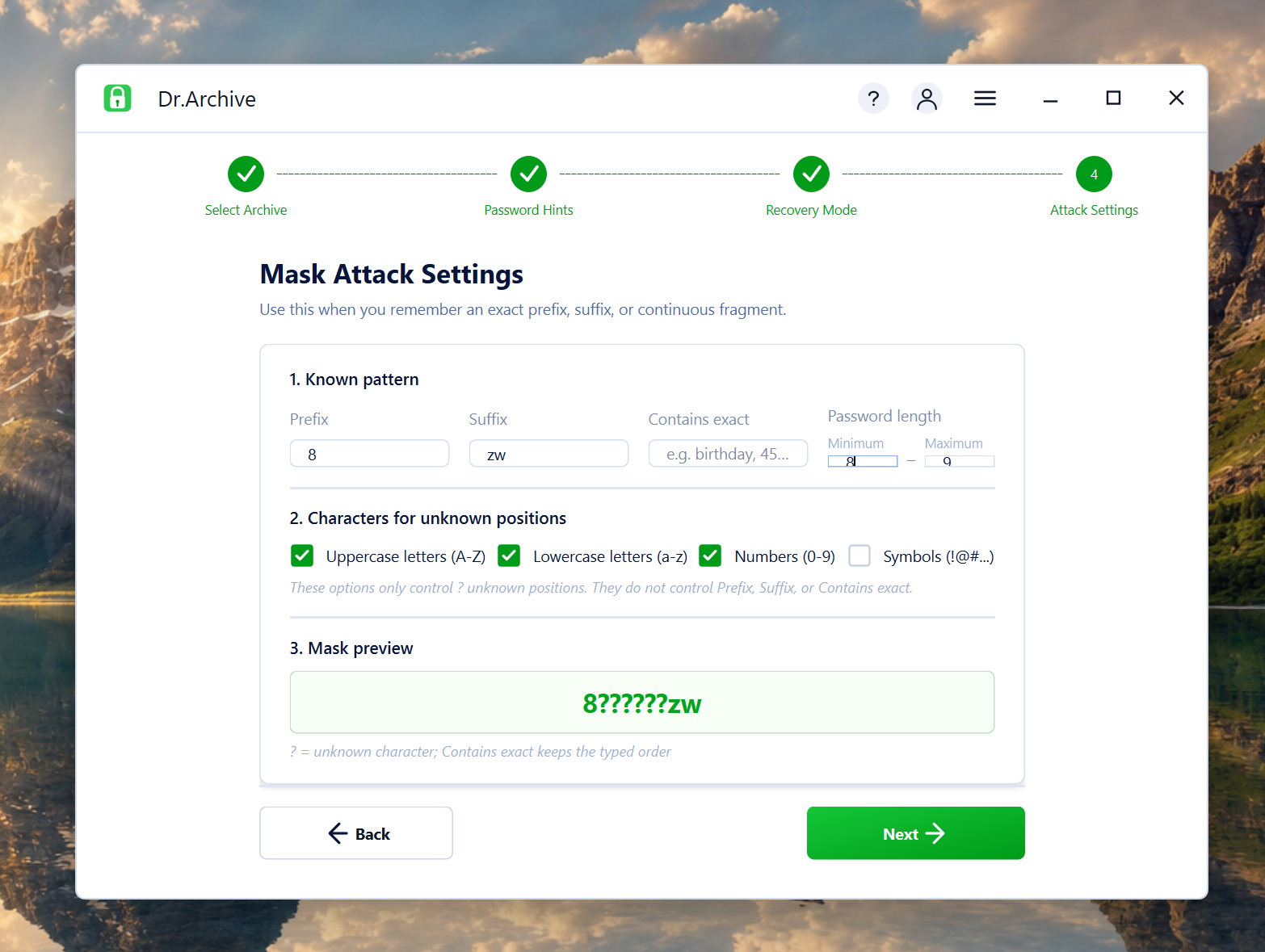
In my case, I remembered that the password probably started with 8 and ended with zw. I also guessed it was around 8 or 9 characters long.
So I entered the prefix, suffix, password length, and selected the character types I wanted Dr.Archive to check.
The mask preview looked similar to this:
8??????zw
This made the search much more focused than typing guesses one by one in WinRAR.
Optional: Check GPU Acceleration
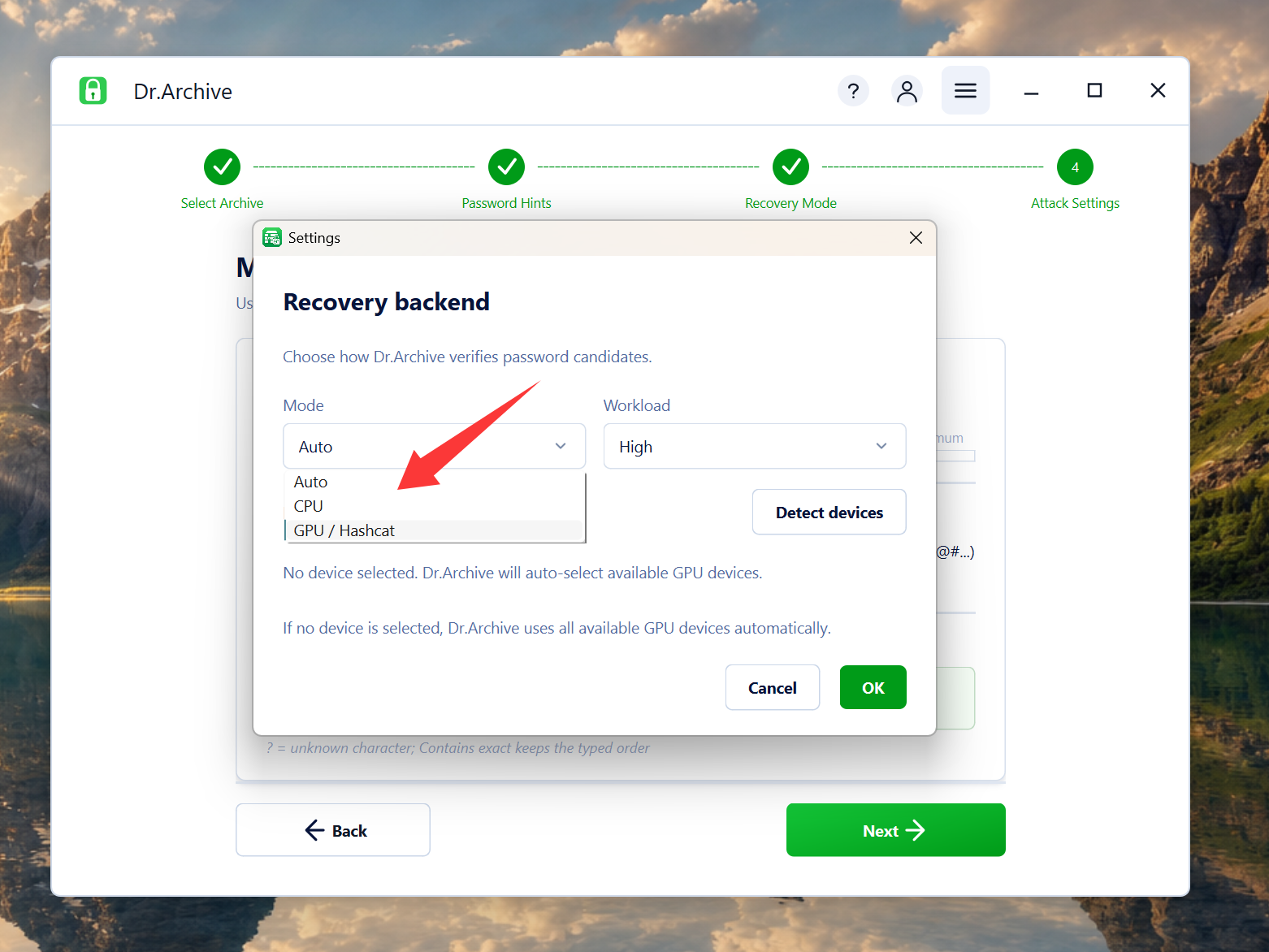
Before starting the recovery, I also checked the acceleration setting from the menu in the upper-right corner. Dr.Archive uses Auto mode by default, so it can automatically use available GPU devices when possible.
I kept it on Auto because it was simple and did not require extra setup. For most users, this is the easiest choice before clicking Next to start recovery.
Step 4: Start the Recovery
After checking the settings, I clicked Next to start the recovery.
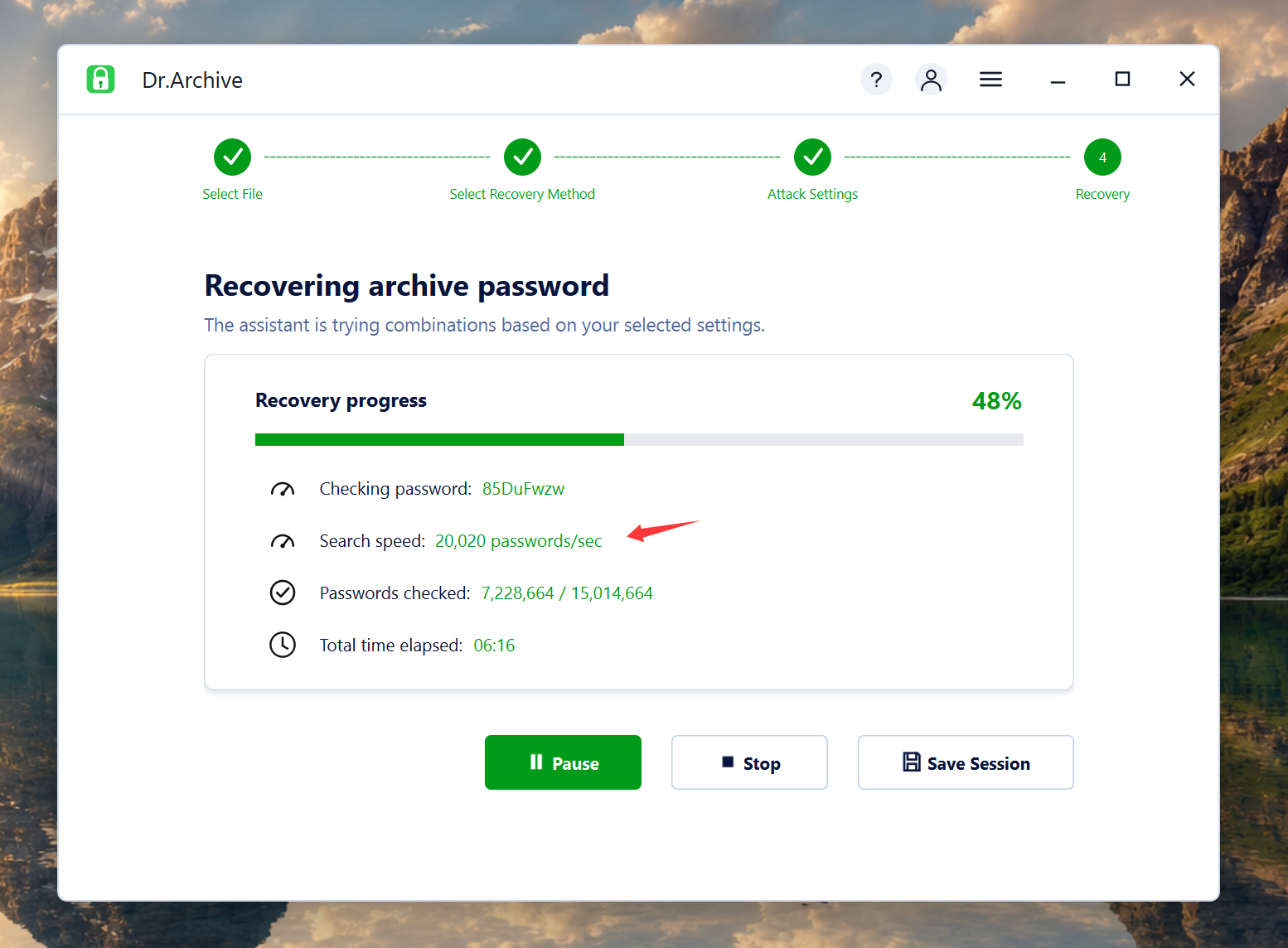
Dr.Archive began testing possible passwords based on my mask settings. On the recovery screen, I could see the current password being checked, search speed, checked passwords, elapsed time, and progress.
Because I remembered part of the password, the search range was smaller and more practical.
Step 5: Copy the Recovered Password
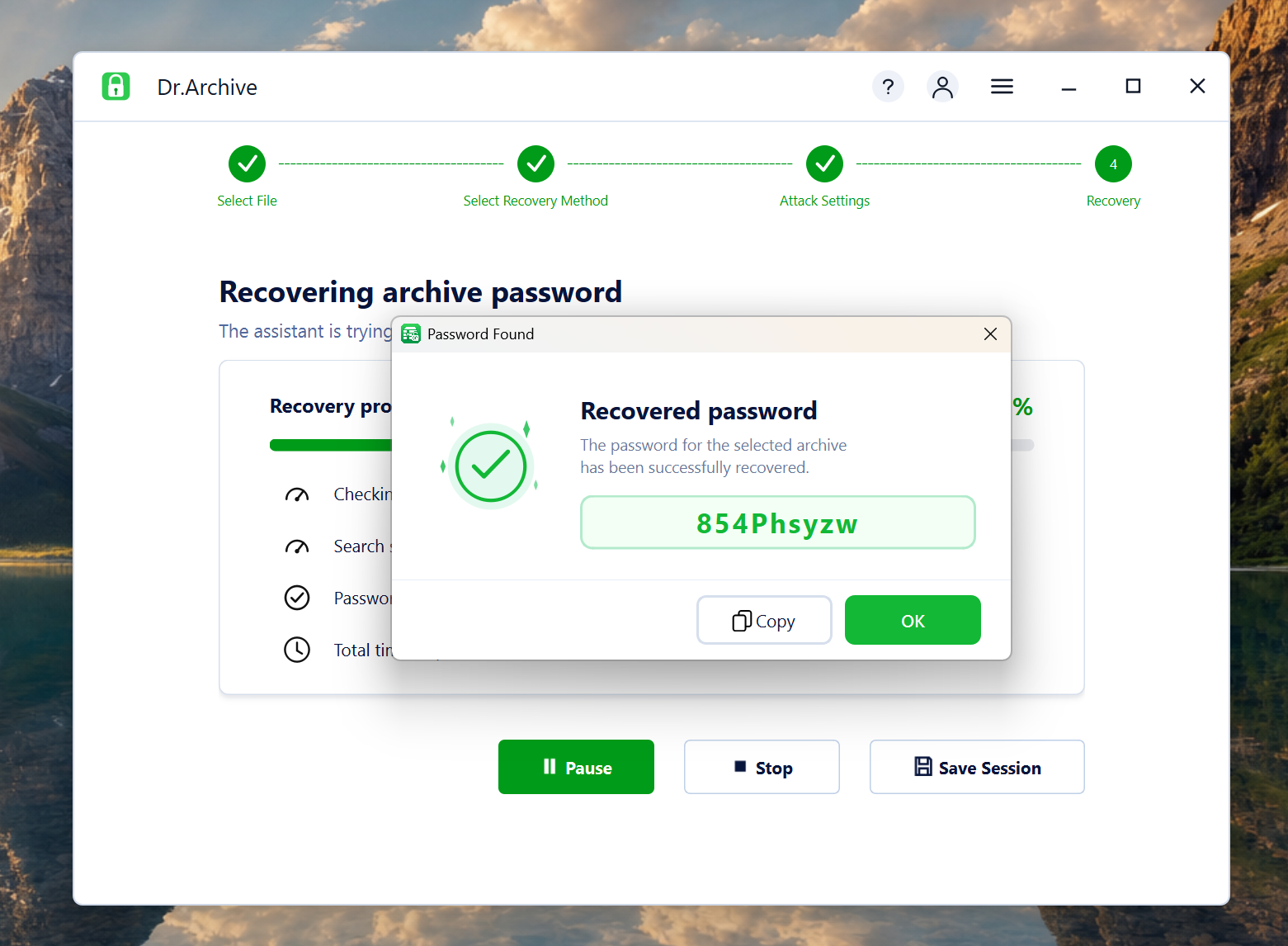
After a while, Dr.Archive found the password and showed it in a result window.
I clicked Copy, opened the RAR file again in WinRAR, pasted the password, and extracted the files normally.
The files inside the archive were still fine. I did not need to repair or change anything.
My Experience
What I liked most about Dr.Archive is that it made the whole process easy to understand. I did not need to use command lines or learn technical details about RAR encryption.
The most important part was simply telling the program what I still remembered about the password. Even a small clue, like the first number or last two letters, can make a big difference.
For me, Mask Attack was the best choice. It turned my rough memory into a clear search pattern and saved me from endless manual guessing.
Final Thoughts
Forgetting a RAR password is frustrating, especially when the archive contains files you still need. Manually trying password after password can waste a lot of time.
Dr.Archive gives you a more organized way to recover the password. You can add the locked RAR file, choose a recovery mode, enter the hints you remember, and let the tool check possible passwords for you.
It is not magic, and a very strong password may still take time. But if the password is based on something you used before, or if you remember part of it, Dr.Archive is worth trying.


